On August 4, a seven-bedroom house on South Old Oregon Inlet Road cut its asking price by $70,000. A week before that, on July 27, a three-bedroom townhouse a few blocks away shaved $10,000 off its number. Go back a few more weeks and you'll find a $2.5 million home that dropped $15,000 on July 8. These aren't distressed sales. They're ordinary sellers in South Nags Head adjusting to what buyers are actually willing to pay this summer.
None of that squares with the headline. Nags Head's median sale price hit $1.1 million in March 2026, up 50.9 percent from a year earlier. Read that number on its own and you'd assume every seller in town has the upper hand. Walk the actual listings in early August and you'll find sellers trimming prices in the same weeks the town-wide number was supposedly soaring. Both things are true. The reason they don't contradict each other is the real story here.
The Headline Number, and Why It Moved So Much
A median only tells you about the middle of whatever sold. In March 2026, that middle was built from just 9 closed sales in Nags Head, down from 24 sales in March 2025. Nine transactions is not a market. It's a small enough sample that the identity of a single buyer changes the answer.
Swap one $2.5 million South Nags Head closing into a nine-sale month, and the median jumps hard. Swap it out for a $644,000 sale from a soundside golf community instead, and the median falls just as hard, with nothing about actual home values changing at all. That's the mechanical reason a 50.9 percent year-over-year jump can appear in the same data set that shows Nags Head homes selling in 56 days on average in March 2026, down from 78 days a year earlier. Homes are moving faster. The median just isn't a stable measurement when so few of them are moving at once.
The same March 2026 data set puts price per square foot at $422 town-wide, up 6.3 percent year over year. That's a far more modest number than the median swing, and it hints at something worth chasing down: Nags Head isn't one price story. It's three, and they've been drifting apart.
Three Neighborhoods Wearing One Median
Nags Head's three best-known residential pockets don't just differ by proximity to the ocean. They differ by what a buyer is actually purchasing, and the recent numbers from each read like three separate towns.
| Submarket | Recent Price Signal | What Sets It Apart |
|---|---|---|
| The Village at Nags Head | Median $644K over the three months ending May 2026, up 2.3% year over year; price per square foot down 6.1% | Soundside and oceanside sections built around Nags Head Golf Links, with a community beach club and pool |
| Old Nags Head Cove | Current listings spanning roughly $475K to $1.09M as of early August 2026 | Canal-front boating community with a clubhouse, community boat ramp, and neighborhood pool |
| South Nags Head | Current listings spanning roughly $625K to over $2.5M as of early August 2026, with several recent price cuts | Oceanfront strip along S. Old Oregon Inlet Road south of Whalebone Junction, dominated by large rental-scale homes |
The Village: Golf Course Calm While the Headline Screamed
The Village at Nags Head is the steadiest of the three. Over the three months ending May 2026, the median sale price there was $644,000, up a modest 2.3 percent from the same stretch a year before. Price per square foot actually fell 6.1 percent over that period. Homes are selling faster than they were, averaging 47 days on market compared to 93 days a year earlier, but the prices themselves aren't behaving like a market up 50 percent.
That's consistent with what the neighborhood is. It's a soundside and oceanside community built around the Nags Head Golf Links, a Scottish-links-style course, with a beach club and pool as shared amenities. Buyers here are largely purchasing a lifestyle and a routine, not chasing the highest possible resale number. Six homes closed there in May 2026, matching the six that closed in May 2025. That kind of consistency doesn't produce headline-grabbing swings, and it shouldn't.
Old Nags Head Cove: Canal-Front Living and Water Access
Old Nags Head Cove is Nags Head's canal-front pocket, built around deep-water access, a community boat ramp, a clubhouse, and its own pool. As of early August 2026, active listings there run from $475,000 for a smaller three-bedroom home up to $1.089 million for a larger four-bedroom property closer to the water.
One current listing is worth flagging for what it says about how this neighborhood ages: a canal-front home carrying a new Fortified Roof installed in 2025 and an X Flood Zone designation, details that matter more here than in almost any other Nags Head pocket because insurance and maintenance costs on the water are part of what you're actually buying. The Cove isn't cheap, but it isn't the neighborhood producing six-figure single-sale swings either. It's a boating community with a fairly narrow, fairly predictable price band.
South Nags Head: Where the Big Swings Actually Live
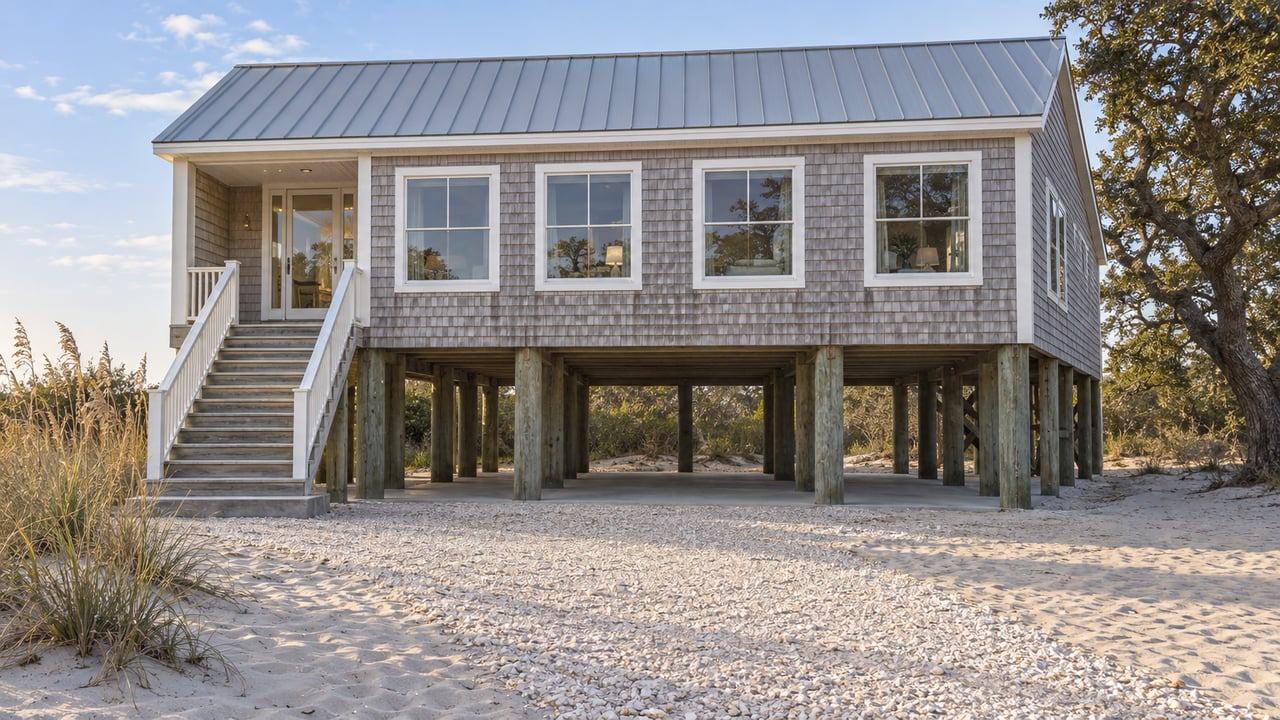
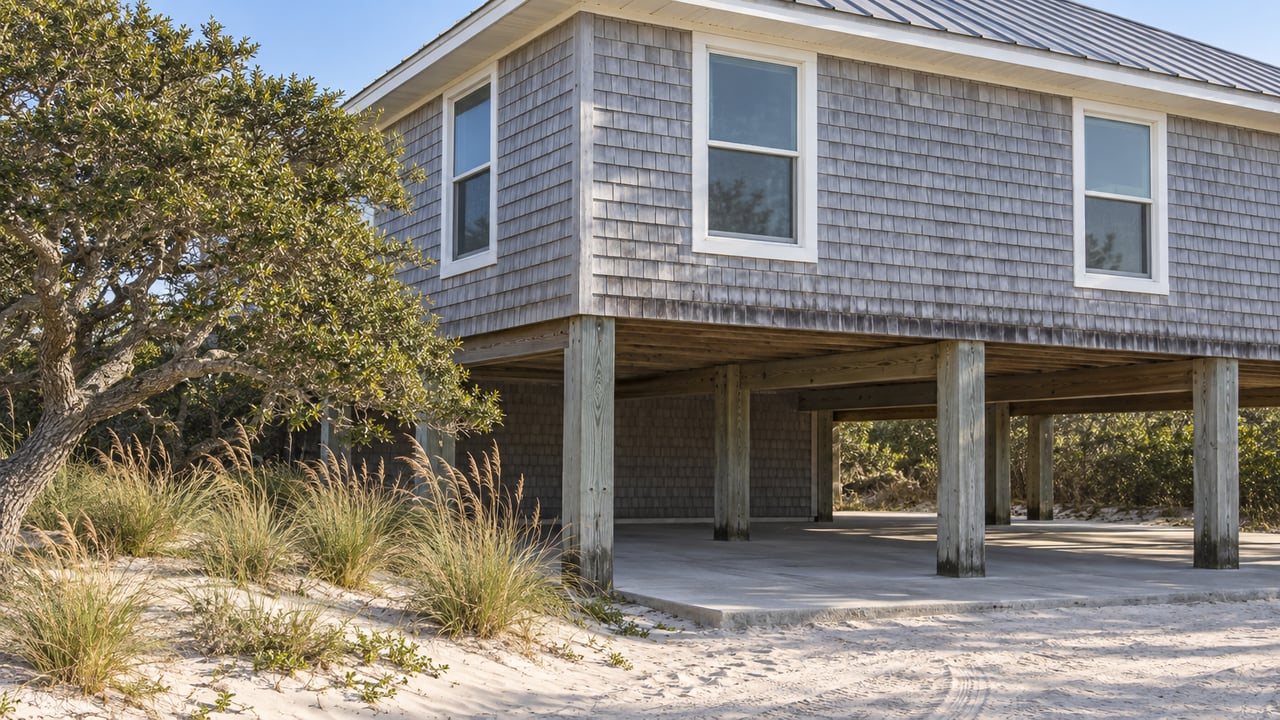
South Nags Head is different in kind, not just in price. It sits oceanside of Cape Hatteras National Seashore, south of Whalebone Junction, along the four-mile paved trail that runs the length of S. Old Oregon Inlet Road. The homes here skew toward large rental-scale properties, seven and eight bedrooms with private pools built to host multiple families at once, and the current listing spread reflects it: roughly $625,000 for a small three-bedroom up to over $2.5 million for the largest oceanfront houses.
This is also the neighborhood carrying the recent price cuts. The $70,000 reduction on August 4, the $26,000 cut on July 11, the $15,000 cut on July 8, the $10,000 cut on July 27. Four adjustments in four weeks, on properties ranging from a $624,900 townhouse to a $2.5 million home. When a town median is built on only 9 sales, it's a fair bet that South Nags Head's wide, volatile price range, not the Village's steady $644,000 or the Cove's tighter band, is doing most of the work in that 50.9 percent headline. A single high-dollar oceanfront closing here can move the whole town's reported number more than months of actual price movement would.
What This Means If You're Comparing Nags Head to Another Town
If you're cross-shopping Nags Head against Duck, Corolla, or another Outer Banks town using the median sale price as your yardstick, you're comparing a number that doesn't describe any specific home in Nags Head. It describes whichever nine transactions happened to close that month, weighted heavily toward whichever submarket was more active.
A buyer looking at the Village at Nags Head should be pricing against that $644,000 median and its own modest 2.3 percent growth, not the town's 50.9 percent headline. A buyer looking at South Nags Head oceanfront should expect the kind of price negotiation the July and August cuts are already showing, not a market where sellers hold all the leverage. And a buyer drawn to Old Nags Head Cove for the water access should know they're stepping into a market where insurance-relevant details like flood zone and roof age matter as much as the sale price itself.
Three Questions Worth Asking Before You Anchor to That Number
Is the town median even useful for pricing my offer? Only as a very rough starting point. With sales volume this thin, the submarket your target home sits in tells you far more than the town-wide figure does.
Why are South Nags Head prices cutting while the headline says the market is up? Because the headline and the cuts are measuring different things. The median reflects which homes closed. The cuts reflect what current sellers are learning about buyer resistance at today's asking prices.
Does a lower price per square foot in the Village mean it's a weaker neighborhood? Not necessarily. A 6.1 percent drop in price per square foot alongside faster days on market, 47 versus 93 a year earlier, looks more like a market finding its footing than one losing value.
If you're weighing these three Nags Head neighborhoods against each other, or against a home somewhere else on the Outer Banks, the town median is a poor place to start the conversation. The submarket data is where the real answer lives, and it's worth walking through before you write an offer or set a list price. Ashley Massey works across Nags Head's neighborhoods every week and can help you figure out which of these three markets actually matches what you're trying to buy or sell. Let's Connect.